

Introduction
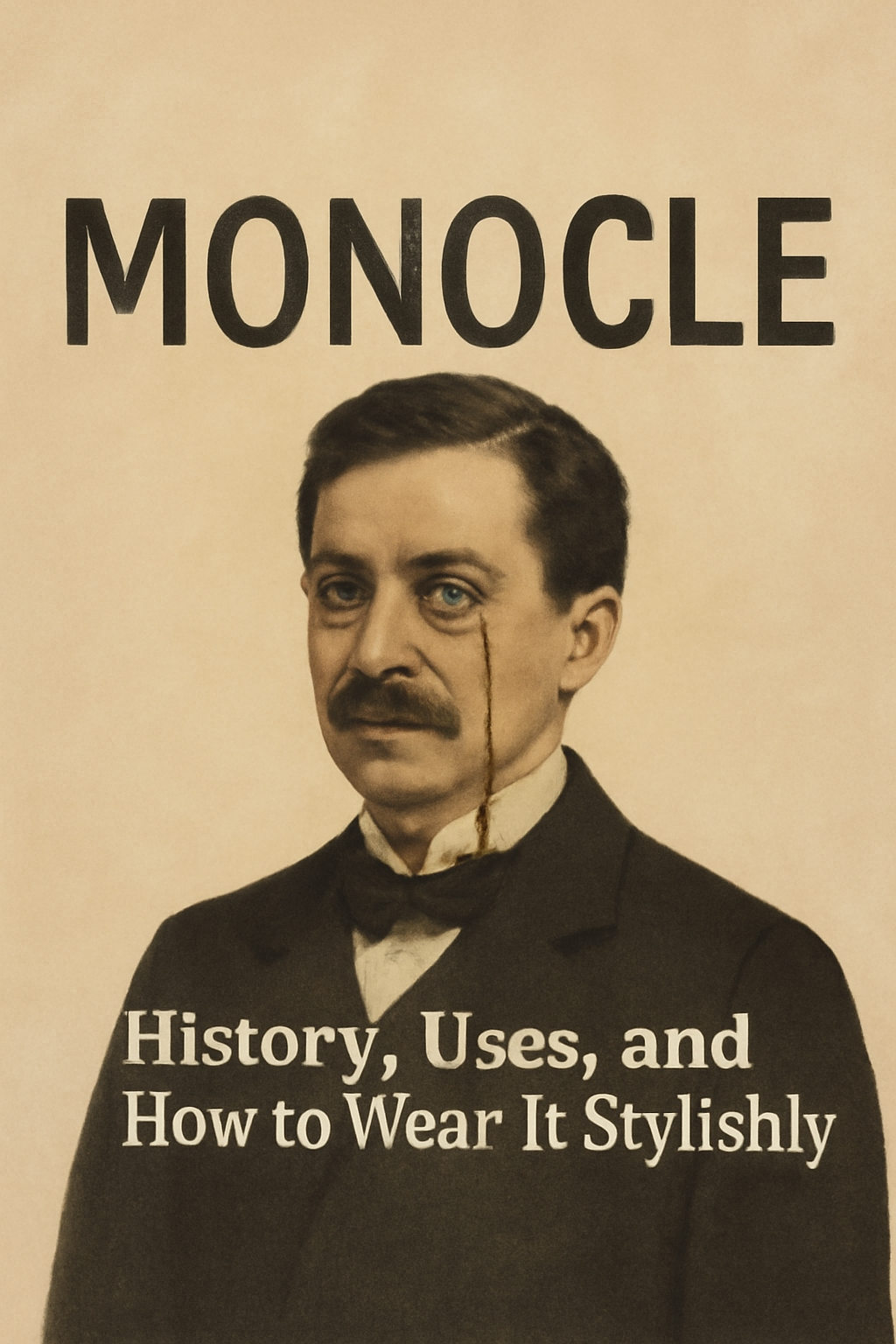
A monocle is a single lens designed to improve vision in just one eye. It is typically held in place by the eye socket, often attached to a string or chain to prevent it from falling. Unlike glasses, which have two lenses, a monocle serves a more specific purpose, helping those with vision issues in only one eye.
Have you ever wondered about the stylish, yet quirky accessory worn by aristocrats in the past? The monocle once symbolized wealth, intellect, and sophistication. While it may not be a common fashion piece today, it still carries a sense of elegance and charm that many find fascinating.
In this article, we’ll explore the rich history of the monocle, how it became a fashionable icon, and how to wear it stylishly today. Whether you’re looking to understand its origins or incorporate it into your own look, this guide has you covered.
The Origins of the Monocle
The monocle, as we know it today, has its origins in the 18th century. The first historical use of the monocle is attributed to the German antiquarian Philipp von Stosch, who, in the early 1700s, used it as a tool to examine engravings and other fine details in his work. The design of the monocle itself can be traced to earlier optical devices, including magnifying glasses and small spectacles. However, it was in the 19th century that the monocle became more popular, especially among the European upper classes.
In the 1800s, the monocle became popular as both a stylish and practical accessory. At the time, it was worn mainly by aristocrats, military officers, and intellectuals, reflecting a sense of intellectualism, status, and refinement. The monocle was not just a tool for improving vision but also a social marker, often worn by those who wished to demonstrate their wealth and position in society.
The Rise of the Monocle in the 19th Century
In the Victorian era, the monocle rose to prominence as an essential accessory for the wealthy and fashionable. This period saw a significant rise in the dandy movement, a subculture of men who prided themselves on their fashionable and sophisticated appearance. Monocles were often worn by these individuals, who viewed the accessory as a tool to enhance their persona.
The monocle was frequently paired with a top hat, a morning coat, and a pocket watch, completing the sophisticated look of a true gentleman. This period also saw the rise of monocles in the military and intellectual circles, where they were worn for both functional and aesthetic reasons. Famous personalities, including politicians, aristocrats, and military figures, were often seen sporting monocles as a symbol of their societal position.

The Types of Monocles: Varieties for Different Preferences
Over time, various designs of monocles emerged, catering to different preferences and functional needs. Each type of monocle was not just a way to improve vision but also a bold fashion statement. Let’s explore some of the common monocle types:
1. Simple Loop Monocle
The simplest type of monocle, called the simple loop, features a metal or plastic loop with a single lens. It fits against the eye socket, placing the lens directly in front of the eye to improve vision. While the loop design is minimalist, it is still effective and has remained popular through the centuries.
This simple monocle was particularly popular with men in the 19th and early 20th centuries. Its simplicity made it versatile, allowing it to be paired with various outfits without overpowering the rest of the ensemble.
2. Galleried Monocle
The galleried monocle is a more advanced design, characterized by a raised edge around the lens known as the “gallery.” The gallery not only gives the monocle a distinctive look but also helps secure it in place while preventing eyelashes from touching the lens. This type of monocle is more stable than the simple loop and was designed for individuals who needed a more secure fit.
The galleried monocle became a staple for the fashionable elite, as it offered both function and style. It was particularly favored by individuals in positions of power or prestige, including military officers and high-ranking officials.
3. Sprung Gallery Monocle
An enhancement of the galleried monocle, the sprung gallery monocle includes a spring mechanism that allows the gallery to adjust for a better fit. This adjustable design provided greater comfort for the wearer, ensuring that the monocle stayed in place even during physical activities.
The sprung gallery monocle was a significant improvement over earlier models, offering a more personalized and customizable fit. It was popular among both men and women, with variations that suited different facial shapes and sizes.
4. Frameless Monocle
The frameless monocle is a minimalist design that forgoes the traditional metal or plastic frame entirely. Instead, the lens is cut to fit the shape of the eye socket, making it less visible and more discreet. This style became popular among individuals who wanted to maintain a subtle appearance while still reaping the benefits of vision correction.
Frameless monocles were particularly popular in the 20th century, when more understated, minimalist fashion trends began to emerge. This design is still available today and is often used in high fashion contexts where subtlety is key.

Cultural Significance of the Monocle
The monocle has always been more than just a piece of eyeweary. Throughout history, it has symbolized class, wealth, and intellectualism. In the 19th and early 20th centuries, wearing a monocle was a statement of one’s social status. It was common for individuals from the aristocratic class to sport monocles, particularly in formal settings such as balls, galas, and political gatherings.
In literature and popular culture, the monocle has often been used to characterize certain personality types. The monocle was frequently associated with fictional characters who were portrayed as sophisticated, wealthy, or eccentric. Perhaps the most famous fictional monocle wearer is Mr. Peanut, the mascot of Planters Peanuts, who is often depicted wearing a monocle as part of his gentlemanly persona.
Beyond its cultural symbolism, the monocle has also been linked to the rise of modernism in the early 20th century. The monocle was often worn by intellectuals, writers, and philosophers who valued individuality and critical thinking. This intellectual association made the monocle a prominent symbol in various intellectual circles, including academia, the arts, and politics.
The Monocle in Modern Fashion
In contemporary fashion, the monocle has experienced a resurgence as a quirky, vintage-inspired accessory. While it is no longer worn for corrective purposes, many designers have embraced the monocle as a bold fashion statement. Monocles are often seen in avant-garde fashion shows, steampunk-inspired outfits, and vintage-themed events. This revival has allowed the monocle to evolve from a practical tool into a symbolic accessory that adds character and style to modern outfits.
The monocle has also made appearances in high-fashion editorials and red carpet events. Celebrities and fashion icons have been spotted wearing monocles as part of their outfits, showcasing the accessory’s versatility in modern styling. In particular, monocles are often paired with formal attire, adding a touch of eccentricity and luxury to otherwise classic looks.

How to Wear a Monocle Today
If you want to incorporate a monocle into your wardrobe, it’s important to do so with confidence and style. Here are some tips on how to wear a monocle in the modern age:
Choose the Right Style
Select a monocle that suits your facial features and personal style. If you’re looking for something bold and eye-catching, go for a larger monocle with a distinctive design, such as the galleried or sprung gallery monocle. If you prefer a more subtle look, opt for a frameless monocle that blends seamlessly into your outfit.
Secure It Properly
Ensure that the monocle fits comfortably in your eye socket. Many monocles have a string or chain to keep them in place and stop them from falling off. If your monocle doesn’t have a string, consider using one to keep it safe.
Coordinate with Your Outfit
When styling a monocle, it’s important to consider your overall outfit. A monocle pairs best with formal or vintage-inspired clothing. You could wear it with a tailored suit, a bowtie, or a top hat for a classic gentleman’s look. Alternatively, you could incorporate a monocle into a steampunk outfit for a more theatrical and avant-garde approach.
Conclusion
The monocle is a distinctive eyewear accessory with a rich history. Originally designed as a vision aid for one eye, it became a symbol of sophistication and status among the wealthy. Today, it still represents a certain charm and elegance.
While monocles are no longer commonly used for vision correction, they’ve made a comeback in fashion. Worn as a bold accessory, the monocle adds a touch of vintage style to modern outfits. If you’re looking to add something special to your wardrobe, the monocle is a great way to make a statement.
FAQs
1. What is a monocle used for?
A monocle is used as a corrective lens for individuals who have vision impairment in one eye. In addition to its practical use, the monocle also serves as a fashion accessory that adds sophistication and class.
2. Why did people wear monocles?
People wore monocles to correct vision problems in one eye. Additionally, monocles became a symbol of high social status, worn by the wealthy and intellectual elite to demonstrate refinement and class.
3. Are monocles still used today?
While monocles are not commonly used for vision correction today, they are still worn as a fashion accessory, particularly in vintage, steampunk, and avant-garde fashion contexts.
4. How do you wear a monocle?
To wear a monocle, simply place it in the eye socket of the eye that requires vision correction. Some monocles are attached to a chain or string for security, while others are designed to stay in place on their own.
5. Where can I buy a monocle?
Monocles can be purchased from specialty eyewear shops, vintage boutiques, and online retailers. Many fashion brands also offer monocles as part of their accessory collections.

Muhammad Ilyas is an experienced SEO expert specializing in search engine optimization strategies that drive traffic and improve rankings. With a strong background in digital marketing, he helps businesses grow their online presence effectively.